
Constructivism states that knowledge can not be given to a student but instead, constructed by the student. The student learns through social interactions and the strength of knowledge construction is shaped by the individual students’ beliefs and perspectives.
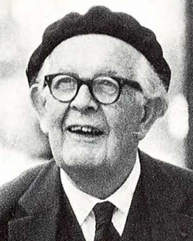
Jean Piaget was a French psychologist who observed his children and others to develop his theory of cognitive development which states children actively build understanding by exploring their environments. Piaget published his research “The Origins of Intelligence in Children” in 1936. His research became the foundation for cognitivism.
 Lev Vygotsky is a Russian and soviet psychologist who theorized three learning zones: zone of actual development, zone of proximal development, and an out-of-reach zone. Vygotsky believed deeper learning occurs through social interactions where MKOs scaffold learning gaps between what a learner can do independently and what a learner can achieve with guidance. While he conducted his observations at the same time as Piaget, his work hadn’t been published until after his death.
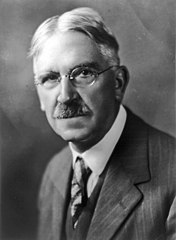 John Dewey is an American psychologist who developed a theory of education that melded Piaget’s radical constructivism with Vygotsky’s social constructivism emphasizing the importance of experiential learning or, “learning by doing.” He published his theory in his book Experience and Education in 1938.
Implications of constructivism for instructional design must include considerations for the following: learner agency; social interactions; and motivations.
Constructivism places the learner at the center of their learning but describes the facilitators of learning as highly-trained experts ready to intervene on demand. Coaching solopreneurs develops the solopreneur’s self-regulated learning mechanism. With every sprint or sporting event, the goal is the win. In this context, solopreneurs set goals and outcomes and strategize a framework for meeting or exceeding the goals. Learned information can be put into action immediately in their business operations, allowing solopreneurs the opportunity to evaluate and adjust in real-time. (Kimmons, 2022)
References
Bates, T. (2022). Teaching in a Digital Age: Guidelines for designing teaching and learning (3rd ed.). Tony Bates Associates Ltd. https://pressbooks.bccampus.ca/teachinginadigitalagev3m/
Kimmons, R. (2022). Education Research Across Multiple Paradigms. https://doi.org/10.59668/133
McLeod, S. (2023, September 29). Extrinsic Vs. Intrinsic Motivation: What’s The Difference? SimplyPsychology. https://www.simplypsychology.org/zone-of-proximal-development.html
Pappas, C. (2015, May 20). Instructional Design Models and Theories:Keller’s ARCS Model of Motivation. eLearning Industry. https://elearningindustry.com/arcs-model-of-motivation
Timeline images sourced at Wikimedia Commons.