
Cognitive learning theories are founded on a core belief that learners actively participate in the learning process. Sensory stimuli combined with environmental stimuli are processed and sorted in a series of complex brain processes that connect new information to prior learning for maximum retention. Cognitivists generally agree learning occurs when information processed in the brain’s working memory is successfully encoded into the brain’s long-term memory. Jean Piaget established a correlation between learning capacity and brain development based on the learner’s age. Lev Vygotsky and Albert Bandura focused on the significance of social interactions and emotional inputs on behavior, while other psychologists sought to theorize brain processes (cognitive functioning) and strategies that best aid learning and retention based on those processes. These psychologists include Jerome Bruner and Benjamin Bloom. Piaget’s phases of intellectual development have heavily influenced early childhood development and K-12 education by informing curriculum based on theorized brain capacity within specific learner age ranges. Bloom’s taxonomy serves as a model of progressing learners from simple brain functions for encoding into more complex brain functions for encoding (Bates, 2022). Vygotsky’s zone of proximal development theory describes a gap between learners who can perform a task independently and learners who can’t perform a task that is bridged when a learner’s instruction is facilitated by someone who can help connect new information to previously learned information–what Bruner refers to as scaffolded instruction. Scaffolding is an active best practice in education.
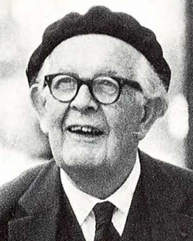
Jean Piaget was a French psychologist who observed his children and others to develop his theory of cognitive development which states children actively build understanding by exploring their environments. Piaget published his research “The Origins of Intelligence in Children” in 1936. His research became the foundation for cognitivism.

Jerome Bruner was an American psychologist and educator who theorized cognitive processes influenced by Piaget’s theory of cognitive development. Bruner’s book, The Process of Education (published in 1960) reformed education in American classrooms. He believed learners were not restricted by predefined developmental stages, and that learning would occur so long as the information is presented in a structured framework that successfully connected new information to previously learned information.
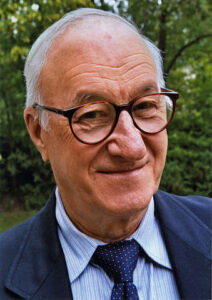 Albert Bandura is an American psychologist who theorized the social cognitive theory which states that learning occurs through observation, imitation, and social experiences after conducting his Bobo doll experiment in 1961. His theory is supported by principles of learner agency, self-efficacy, mediating processes, and observational learning.
 Lev Vygotsky is a Russian and soviet psychologist who theorized “sociocultural learning”, or social development theory, in a paper titled Thought and language published in 1962. Social development theory states learning experiences rely on social interactions between learners and their peers or more knowledgeable others enhance learning capacity. He also proposed a theory of scaffolding in which three learning zones exist: zone of acutal developement, zone of proximal development, and an out of reach zone.
Implications of cognitivism for instructional design can be narrowed down to three considerations that affect learning: social interactions; connecting new information to prior learning; and cognitive processes.
Skating at the roller rink is one of my favorite pastimes and Skatie is one of my favorite YouTube instructors on skating technique. In this video, she demonstrates the mechanics of skating backward so viewers can feel more confident as they practice their skills.
The intrinsic cognitive load of the content: your prior learning will determine if you are a beginner, intermediate, or advanced learner. A beginner skater may be overwhelmed by the mechanics of skating backward because they haven’t yet mastered the mechanics of skating forward, balance, or shifting weight on the edges of the skate to control movement (Davis, Norman, 2016). However, an intermediate or advanced skater with this prior knowledge will consider the intrinsic cognitive load lower than the beginner and commit to continued instruction. To reduce the extraneous cognitive load, Skatie breaks down the mechanics into a series of simple short movements for the learner to practice (Hughes, 2016). I’m glad she uses her natural voice to instruct so the learner can make a stronger human connection for more effective observational learning (Davis, Norman, 2016).
The video editing, at times, distracts from the instruction. While I like a variety of shots—zooming in on the skates and coming out to see the full body—I would remove the backward skate video at 0:15 because its placement is more meaningful at 0:20 and let the words at 0:27 stay on the screen a full second longer because the quick disappearance is too fast for the viewer to process in a meaningful way. Skatie does a great job recapping every step and putting all the steps together at the end so the learner can mimic the mechanics in motion (Pappas, 2016).
References
Bates, T. (2022). Teaching in a Digital Age: Guidelines for designing teaching and learning (3rd ed.). Tony Bates Associates Ltd. https://pressbooks.bccampus.ca/teachinginadigitalagev3m
Davis, G., & Norman, M. (2016, July 19). Principles of Multimedia Learning. Wiley University Services. https://ctl.wiley.com/principles-of-multimedia-learning/
Expert Panel. (2022, June 21). 14 Unique Challenges Solopreneurs Face (And How To Alleviate Them). Forbes. https://www.forbes.com/councils/forbescoachescouncil/2022/06/21/14-unique-challenges-solopreneurs-face-and-how-to-alleviate-them/
Hughes, A. (2019, December 12). Tips To Avoid Cognitive Overload In Employee Training Programs. ELearning Industry. https://elearningindustry.com/avoid-cognitive-overload-in-employee-training-programs
Kimmons, R. (2022). Education Research Across Multiple Paradigms. https://doi.org/10.59668/133
McLeod, S. (2024, January 24). Piaget’s Formal Operational Stage: Definition & Examples. Simply Psychology. https://www.simplypsychology.org/formal-operational.html
McLeod, S. (2024, January 24). Piaget’s Theory and Stages of Cognitive Development. SimplyPsychology. https://www.simplypsychology.org/piaget.html
McLeod, S. (2024, January 24). Vygotsky’s Theory of Cognitive Development. SimplyPsychology. https://www.simplypsychology.org/vygotsky.html
McLeod, S. (2024, February 1). Albert Bandura’s Social Learning Theory. SimplyPsychology. https://www.simplypsychology.org/bandura.html
McLeod, S. (2024, February 1). Jerome Bruner’s Theory of Learning and Cognitive Development. SimplyPsychology. https://www.simplypsychology.org/bruner.html
Pappas, C. (2016, April 17). 7 Tips to Reduce Cognitive Overload in eLearning. eLearning Industry. https://elearningindustry.com/7-tips-reduce-cognitive-overload-elearning
Timeline images sourced at Wikimedia Commons.