
Behaviorism is a learning theory with a core belief evidenced only by what can be observed that learning occurs through the interaction of an individual with their environment, driven by external stimuli and reinforcement. Key tenets of behaviorism explore conditioning—classical and operant. Behaviorism was first introduced as a learning theory by Ivan Pavlov. Additional psychologists who expounded on Pavlov’s ideas include Edward Thorndike, John B. Watson, and B. F. Skinner. Skinner’s ideas on behaviorism heavily influenced classroom teaching practices. Critics of behaviorism often argue behaviorism oversimplifies learning—reducing human minds to function like animal minds—and excludes cognitive processes as viable internal stimuli affecting observed behavioral responses to external stimuli (Brau & Robinson, 2018).

Ivan Pavlov was a Russian physiologist studying digestive processes of the stomach of dogs when he observed the behavior of the dog at feeding time. He recorded these observations to form the theory of classical conditioning after conducting an experiment using two stimuli (bell, food) to consistently produce an involuntary response (salivating dog). Pavlov published his research “Lectures on the Work of the Digestive Glands” in April 1897. His research became the foundation for behaviorism.

Edward Thorndike was an American psychologist who conducted the Puzzle Box experiment in which he placed a cat in a box with a piece of food outside the box. He recorded the length of time it took the cat to push a lever to get the food. From this experiment, Thorndike theorized the law of effect which states the speed at which a behavior is learned is accelerated with positive reinforcements and progressively unlearned with negative reinforcement. He published his findings in a paper titled “Animal Intelligence: An Experimental Study of the Associative Processes in Animals” in 1898.
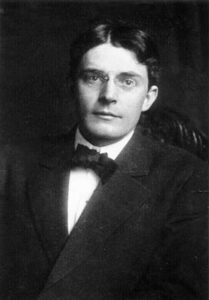 John Broadus Watson was the first psychologist to use human test subjects in experiments, most famously, Little Albert. Watson conditioned a 9-month old to associate a jarring noise with the appearance of animals to produce a fear response. He believed strongly that psychology should be purely objective and solely based on what could be controlled and observed and all other considerations ignored. Watson published his research in a 1913 article titled, “Psychology as the Behaviorist Views It.”
 American psychologist B. F. Skinner expounded on Thorndikes law of effect to introduce the theory of operant conditioning, in which behavior could be predicted based on reinforcements and punishments. He observed reinforcements encourage behavior while punishments would discourage behavior. Skinner published his findings in a book titled “The Behavior of Organisms” in 1938.
Implications of behaviorism for instructional design are centered around three principles that produce learning: controlled environment; stimuli and response; and conditioning through the use of reinforcements.
Many people celebrate creativity because they are under the assumption that creativity is a “gift” that you either have or don’t have. I believe creativity can be taught and purely observed by behavioral response (Bates, 2022). In my instructional design context, the 9-12 digital arts classroom, I use the creative design process as a controlled framework for assessment (Brau & Robinson, 2018) that yields creative solutions. The design process is a series of steps, similar to the scientific method, in which the successful completion of smaller steps progressively meets the assessment objective. Gagne’s Nine Events of Instruction are embedded in the creative design process, specifically, teacher review/feedback at each phase (Thomas, 2023), enabling me to use reinforcements to shape the behavior (McLeod, 2024).
Instructional designers should consider visual aesthetics of the classroom design so that the environment maximizes learning (Terada & Merrill, 2023). This is true of both online/virtual classrooms and physical classrooms. My instructional context is the digital arts classroom/computer lab where I leveraged what was in my control to promote learning, including wall displays and learning zones. My displays were organized visually so that all of the keyboard shortcuts meant to improve technical skills were in one place, principles of composition were in one place, and phases of the design process were in one place. These were all foundational, repetitive skills the learners would need in everything so limiting the number of wall displays to these three skills simplified the environment and promoted retention (Terada & Merrill, 2023). I didn’t have much flexibility in seating arrangement, but I found a way to create learning zones—library, space bar, top creatives, and free sketch. The library is where I stored design books from my personal collection for creative inspiration; the space bar was a table for students experiencing creative blocks to rest or snack for 5 minutes max; top creatives was a pin board dedicated to the best assignment submissions in each class—a positive variable interval reinforcement (Stangor & Walinga, 2014); and the free sketch was an area on the whiteboard I reserved for students to write or draw anything. I recently learned that this area showcasing nonacademic talent created an opportunity for students to connect to the learning experience in a positive way (Terada & Merrill, 2023).
One limitation of behaviorism, even radical behaviorism, is that the creative industry thrives when designers and storytellers draw from their experiences. These would be the thoughts, curiosities, fears, experiences, trauma, traditions—internal cognitive processes that are excluded as underlying causes of behavior in behaviorism (Bates, 2022). As creative classroom teachers, we challenge our learners to own their uniqueness and share their perspectives through creative storytelling (think music and film) to celebrate a human experience that people can connect and relate to.
References
Brau, B., Fox, N., & Robinson, E. (2018). Behaviorism. In R. Kimmons, The Students’ Guide to Learning Design and Research. EdTech Books. Retrieved from https://edtechbooks.org/studentguide/behaviorism
Bates, A. W. (2022). Teaching in a digital age: Guidelines for designing teaching and learning (3rd ed.). Tony Bates Associates Ltd. https://pressbooks.bccampus.ca/teachinginadigitalagev3m/
McLeod, S. (2024). Gagne’s Conditions of Learning Theory. Simply Psychology. https://www.simplypsychology.org/conditions-of-learning-gagne.html
Stangor, C. and Walinga, J. (2014). Introduction to Psychology – 1st Canadian Edition. Victoria, B.C.: BCcampus. Retrieved from https://opentextbc.ca/introductiontopsychology/
Terada, Y., & Merrill, S. (2023). The Science of Classroom Design. Edutopia. https://www.edutopia.org/article/the-science-of-classroom-design/
Thomas, P. (2023). “Why K12 Teachers Make Great Instructional Designers,” Edtech Mentor Karen Mahon Explains. Emeritus. https://emeritus.org/blog/product-design-k12-teachers-instructional-designer/. Jan 16, 2025.