
Andragogy is a learning theory that establishes adult learners have distinctly unique preferences and motivations than children, rendering pedagogical learning models less effective for adults. There are five assumptions and six principles that guide andragogy, and an understanding that adults can learn in formal, informal, and non-formal learning environments.
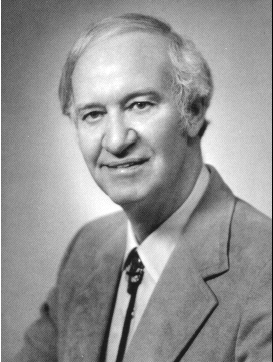
Malcolm Knowles observed pedagogical learning models would prove ineffective for adult learners because adults are autonomous and self-directed learners who seek education to fulfill specific goals and solve real-life problems. He insisted there was an “art and science” of assisting adults in their learning journey called andragogy, a term coined by Alexander Kapp, a German teacher, in 1833. Knowles contributed five assumptions and six principles to andragogy that offer guidance on creating effective adult learning environments.
Implications of andragogy for instructional design must include these considerations: adults can thrive equally in formal, informal, and non-formal learning settings; adult learners are shaped by their experiences; and adult learners are motivated by clearly defined contexts.
The strength of andragogy is the vast number of resources available for learners to explore and absorb to satisfy their need for information. Andragogical frameworks for learning can utilize multiple learning theories and contexts to facilitate the needs of the learner. Because the framework is generally problem-centered or topic-centered (Blondy, 2007), learning applications are immediate. As a solopreneur brand coach, it’s important to design learning opportunities that speak directly to challenges in business branding. Branding is such a broad umbrella representing the variety of ways businesses present themselves to the world, that clear communication of learning objectives is crucial to keeping the learner engaged. Promoting learner autonomy in this context looks like allowing the learner to set their own learning goals and empowering learners to track their progress along the way (UMGC, 2024). For coaching solopreneurs, collaborative knowledge-sharing opportunities are paramount. This is a unique context common to solopreneurs who work alone and need reassurance that they aren’t alone in the challenges they face. Peer feedback and social interactions foster community, and camaraderie, and expand PLNs so informal learning and relationship building continue beyond the formal learning setting. One challenging aspect of andragogy is unpredictability. Due to the vast number of resources available for exploration, the facilitator has to be prepared for ill-conceived ideas, misinterpretations, or off-topic responses that a learner has integrated into their knowledge well. The facilitator has to be skilled in redirecting conversation, and asking questions that challenge learners to think critically and confront bias so that new information and ideas are received and integrated—even when they conflict with former beliefs.
It was the final year of my BFA studies in Graphic Design, and I was choosing electives for the last semester. I saw the bookbinding for designers course. My intrinsic motivations for choosing bookbinding were out of interest and curiosity, and for delayed application—I knew I had to write a senior thesis and I decided I would bind my own book as part of the final presentation (readiness, orientation to the problem). One aspect of the class that made the course memorable was my professor’s appreciation for book arts and crafting. She was a short lady with short hair and big eyeglasses—she looked like a librarian from all the cartoons and movies where one was represented. She would tell us about all the book festivals she attended and share pictures of the cool books she’d seen over the years. I believed she was more than an expert on the subject. Her experiences reflected a joy and admiration for the craft of it. *Flashback* During my senior year in high school, I secured an internship with the National Agricultural Library in the Rare Books/Special Collections Division. You needed to wear gloves to handle these books. I got to see original watercolor paintings from Darwin’s plant studies. It was super cool! I was also introduced to unique bookbinding that formed the foundation of prior knowledge I’d build on through this course (experience). After we learned the parts of the book, we began constructing books using various bindery sewing techniques. We purchased book board, selected the decorative paper to cover the board, the color of the thread for sewing, book linens for the spine, and oftentimes, we determined the final book size (self-concept). Every week, we produced a hand-crafted physical product and decided its fate—journal, sketchbook, memory book. We used non-tech tools like the drill press, vice grip, thread, needle—a welcome break from the computer. In the physical construction of the books, we, as students, talked to each other about our aesthetic selections, materials, and finishes. The success of this learning experience could be attributed to the combination of skill acquisition, practice, social interactions, and sharing of ideas.
My preference for learning is determined by my orientation to the problem. In the case of coursework, I favor formal learning environments where learning objectives are often stated clearly, there are deadlines for learning reflection, and a schedule of assessments. This learning structure requires me to engage the content at a consistently high level (internal motivation). I also prefer formal learning environments to acquire skills that serve my needs repeatedly over time, a delayed application of learning. In the case of personal or professional development, I favor informal learning formats where I choose the content that meets my specific needs (readiness to learn). I search for relevant topic-centered content in and around my PLN for answers to my most urgent needs for information. Webinars, downloads, books, blogs, Facebook communities, published papers, and YouTube videos generally provide answers. Informal learning is for my immediate application. The drawback of informal learning driven by readiness and derived from immediate need in my experience has been knowledge retention. In instances when I’ve needed to acquire technical (software) skills, learning proved momentary—lasting long enough to produce the outcome I needed. For example, I needed to achieve a particularly cool Photoshop text effect for a project and scoured the internet for tutorials. I found tutorials with step-by-step instructions and simply executed the steps—passive learning—versus mastering the skill to perform it independently. What I hope to contribute to my PLN are ideas others can build on, leading to knowledge retention, even if the knowledge is extremely niche. I hope to share these ideas in the same formats I absorb them—webinars, downloads, YouTube videos, and short posts. People often reference quotes and stories that cause them to think differently. Diversity of ideas fuels PLNs and social media platforms are great vehicles for informal learning. Using these platforms to share ideas allows you to connect to others with similar philosophies and invite feedback from those with different perspectives. When ideas flourish, PLNs expand, and as a result, may lead to opportunities for facilitating these ideas in formal learning formats.
References
Blondy, L. (2007). Evaluation and Application of Andragogical Assumptions to the Adult Online Learning Environment. Journal of Interactive Learning, 6(2), 116-130. https://www.ncolr.org/jiol/issues/pdf/6.2.3.pdf
Cobb, C. (2023, November 29). Effective Strategies for Teaching Adult Learners. Learning Revolution. https://www.ncolr.org/jiol/issues/pdf/6.2.3.pdf
Coleman, H. (2023, June 8). What is Adult Learning Theory and How to Use It In Employee Training. eLearning Industry. https://www.ispringsolutions.com/blog/adult-learning-theories
Pappas, C. (2014, August 15). 9 Tips To Apply Adult Learning Theory to eLearning. ELearning Industry. https://elearningindustry.com/9-tips-apply-adult-learning-theory-to-elearning
Pappas, C. (2013, May 9). The Adult Learning Theory-Androgogy-of Malcolm Knowles. eLearning Industry. https://elearningindustry.com/the-adult-learning-theory-andragogy-of-malcolm-knowles
Roeueche, S. (Ed.). (2007, February 9). 30 Things We Know for Sure About Adult Learning. NISOD Innovation Abstracts, 29(4), https://www.muskegoncc.edu/Include/CTL%20DOCS/XXIX_No4.pdf
Types of Education: Formal, Informal & Non-formal. (2019, September 20). Passion in Education. https://www.passionineducation.com/types-of-education-formal-informal-non-formal/