
Learning Theories and Learner Analysis in Learning Design: Cognitivism

LDTC 600 – Unit 3

Overview

Cognitive learning theories are founded on a core belief that learners actively participate in the learning process. Sensory stimuli combined with environmental stimuli are processed and sorted in a series of complex brain processes that connect new information to prior learning for maximum retention. Cognitivists generally agree learning occurs when information processed in the brain’s working memory is successfully encoded into the brain’s long-term memory. Jean Piaget established a correlation between learning capacity and brain development based on the learner’s age. Lev Vygotsky and Albert Bandura focused on the significance of social interactions and emotional inputs on behavior, while other psychologists sought to theorize brain processes (cognitive functioning) and strategies that best aid learning and retention based on those processes. These psychologists include Jerome Bruner and Benjamin Bloom. Piaget’s phases of intellectual development have heavily influenced early childhood development and K-12 education by informing curriculum based on theorized brain capacity within specific learner age ranges. Bloom’s taxonomy serves as a model of progressing learners from simple brain functions for encoding into more complex brain functions for encoding (Bates, 2022). Vygotsky’s zone of proximal development theory describes a gap between learners who can perform a task independently and learners who can’t perform a task that is bridged when a learner’s instruction is facilitated by someone who can help connect new information to previously learned information–what Bruner refers to as scaffolded instruction. Scaffolding is an active best practice in education.
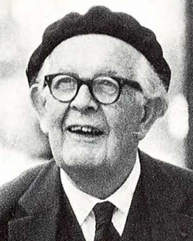
1936
Jean Piaget
Theory of Cognitive Development

Photo of Jean Piaget

Jean Piaget was a French psychologist who observed his children and others to develop his theory of cognitive development which states children actively build understanding by exploring their environments. Piaget published his research “The Origins of Intelligence in Children” in 1936. His research became the foundation for cognitivism.

1960
Jerome Bruner
Spiral Curriculum & Scaffolding

Photo of Jerome Bruner

Jerome Bruner was an American psychologist and educator who theorized cognitive processes influenced by Piaget’s theory of cognitive development. Bruner’s book, The Process of Education (published in 1960) reformed education in American classrooms. He believed learners were not restricted by predefined developmental stages, and that learning would occur so long as the information is presented in a structured framework that successfully connected new information to previously learned information. 

1961
Albert Bandura
Social Cognitive Theory

Photo of Albert BanduraAlbert Bandura is an American psychologist who theorized the social cognitive theory which states that learning occurs through observation, imitation, and social experiences after conducting his Bobo doll experiment in 1961. His theory is supported by principles of learner agency, self-efficacy, mediating processes, and observational learning. 

1962
Lev Vygotsky
Sociocultural Theory & Zone of Proximal Development

Photo of Lev Vygotsky Lev Vygotsky is a Russian and soviet psychologist who theorized “sociocultural learning”, or social development theory, in a paper titled Thought and language published in 1962. Social development theory states learning experiences rely on social interactions between learners and their peers or more knowledgeable others  enhance learning capacity. He also proposed a theory of scaffolding in which three learning zones exist: zone of acutal developement, zone of proximal development, and an out of reach zone.

Implications of Cognitivism for Instructional Design

Implications of cognitivism for instructional design can be narrowed down to three considerations that affect learning: social interactions; connecting new information to prior learning; and cognitive processes.

Social Interactions

Social interactions are key factors in cognitive theories and learning. Social interactions can impact learning in the following three ways: between learners in the same peer group; learners imitating observed behaviors; and learners engaging more knowledgable others (MKOs) (McLeod, 2024).

Learning from Interacting with Peers

Cognitivists use collaborative learning strategies to facilitate learning between student peers. Peer groups create unique learning conditions in which learners experience exposure to diverse perspectives, improved communication, and active participation in learning through conversation (McLeod, 2024). 

Learning through Imitation of Observed Behaviors 

Learners choose behaviors they will imitate based on one or several of four mediational processes that ultimately measure if a behavior should be imitated. Bandura’s social learning theory states that models must first be qualified by their relationship, title, position, or status to be observed by a learner. It also states that modeled behavior can be observed directly, or acted out by following verbal descriptions of the behavior; or observed in various media (tv, books, online) and demonstrated (McLeod, 2024).    

Learning from More Knowledgeable Others (MKOs)

Vygotsky believed the presence of supportive individuals in social interactions made the learning experience more successful. MKOs are the individuals who bridge the zone of proximal development—they facilitate learning in such a way that makes a task that seemed out of the learner’s reach possible. Teachers, parents, and mentors are considered MKOs where learner engagement with these individuals can lead to learner gains in higher mental functions (McLeod, 2024).

Connecting New Information to Prior Learning

The success of cognitive theories is contingent upon a learner’s ability to connect new information to previously learned information to maximize retention. A key step to sucessfully implementing cognitivist strategies requires the instructor to assess what learners already know to make meaningful connections to new information (McLeod, 2024). Another reason to assess prior learning is to avoid boring the learner with information they already know (Davis, Norman, 2016). Cognitivism strives to constantly build on previous knowledge with more complex brain functioning or more abstract thought. 

Cognitive Processes

Cognitivists have theorized complex brain functions during observational learning, information processing, and behavioral response to inputs and instructional directors use these theories to structure curriculum frameworks and sequences (Kimmons, 2022). Brain functions evolve during childhood, adolescence, and young adulthood—instructional designers often consider neurological functions common to different age groups and devise learning strategies based on learner capacity (McLeod, 2024). This also includes learning strategies for students with limited cognitive functions due to disabilities. In addition to recalling prior learning, instructional designers focus on information comprehension, synthesis, and integration the ensure learners achieve pre-determined outcomes (Kimmons, 2022).     

Strengths and Limitations of Cognitivism when Coaching Solopreneurs

Social Interactions

Peer Groups

Solopreneurs are a unique group of learners because they wear many hats at work—they act as micro experts in all facets of their business until there is enough growth to support onboarding human resources. All solopreneurs are experts on their product/service but few invest the same time and energy in marketing their product/service because they’re overwhelmed by the marketing machine (Expert Panel, 2022). Cognitivism leverages collaborative learning between peers to enhance critical thinking and performance through structured discussions where shared ideas, experiences, and practices help everyone succeed. This is the strength of business accelerator cohorts. Instead of classifying this peer group by age or brain capacity, the peer group in this context share common experiences as solopreneurs.   

Case Studies & Expertise

Observational learning is critical in brand coaching. I have to present as a knowledgeable expert able to walk learners through real-life case studies of brand success for companies that are similar to my client’s companies. These case studies are examples of Bandura’s social cognitive theory in action where we observe the strategy of another company, extract strategies we can implement, imitate the strategy in our operation, and evaluate its success (McLeod, 2024). 

Connecting New Information to Prior Learning

Social Learning Theory

One benefit of symbolic models for learning is the ability to access the client’s prior knowledge related to a brand experience (McLeod, 2024). Brand experiences are driven by multimedia sensory inputs—jingles, commercials, smells, tastes, in-person interactions, logo prevalence, and visibility. These inputs could have occurred during social interactions, such as family traditions, vacations, routines, or childhood memories with friends (McLeod, 2024). My objective as a brand coach is to develop the solopreneur’s self-efficacy in brand and marketing—as an aid in developing an actionable brand strategy that creates a good and memorable brand experience for someone else (emphasis on the good experience because bad experiences are just as powerful).   

Social Development Theory

Bruner believed past experiences shape our mental processes and cognition (McLeod, 2024). Brand narratives are all about telling the story that resonates with people’s experiences or values. Branding as a whole is largely a social experiment designed to solve problems for a community of people in need of a solution that they can’t wait to tell others about if it meets their need. My role as the expert, or MKO in Vygotsky’s zone of proximal development, is to bridge the gap between what my solopreneurs can do and haven’t yet done as micro marketing experts, and help devise a branding framework for their product/service that builds a community of advocates who will do the heavy lift to grow the brand through word-of-mouth, social shares, and referral business (McLeod, 2024).   

Cognitive Load & Self-Regulated Learning

Balancing Cognitive Load

As an instructional designer/brand coach for solopreneurs, finding balance in cognitive load is crucial to successful learning. These are adult learners who wear all the hats in business operations and have family, friendships, or other demands on their time and brain space. Solopreneurs rarely stop thinking about business, even during personal engagements. (Expert Panel, 2022) I believe in presenting instructional content consistently so learners recognize cues and key points. I also believe instructional content should be concise and accessible to the non-marketing expert—favoring language for practical application instead of industry jargon that can become overwhelming to absorb. (Kimmons, 2022)

Developing Self-Regulation

Coaching also develops the solopreneur’s self-regulated learning mechanism. With every sprint or sporting event, the goal is the win. In this context, soloprenuers set goals and outcomes and strategize a framework for meeting or exceeding the goals. Learned information can be put into action immediately in their business operations, allowing solopreneurs an opportunity to evaluate and adjust in real-time. (Kimmons, 2022)

Coaching is Complex Learning

Piaget describes formal operational thinking as a function of the adolescent to adulthood brain (McLeod, 2024). In order to be a solopreneur, you have to be comfortable with your brain functioning in formal operational processes constantly (Laker, 2024). There is a demand for systematic thinking to ease the cognitive load of managing all the facets of business and solopreneurs are constantly refining metacognitive strategies they use to plan, monitor, and evaluate their business success (Expert Panel, 2022). My role in this instructional context is to help solopreneurs develop flexible or adaptable schema for their branding and marketing endeavors, and a system for analyzing and evaluating the data from their branding and marketing endeavors. For example, if I told every solopreneur they need a presence on every social media platform, those words alone create cognitive discomfort, or disequilibrium, and widen the distance between what the learner can do and what they believe is beyond their capacity (McLeod, 2024). Alternatively, commiting to one social media platform is less of a cognitive load and generates enough disequilibrium that can be balanced through accommodation (the implementation of a branded content strategy and successful engagement), transitioning a task from the out-of-reach zone into the zone of actual development. The schema can be applied to the next social media platform with a much lower level or manageable accommodations and assimilations to achieve success in that digital environment. 

Cognitivism Instructional Material

A Lesson in Backwards Skating

Skating at the roller rink is one of my favorite pastimes and Skatie is one of my favorite YouTube instructors on skating technique. In this video, she demonstrates the mechanics of skating backward so viewers can feel more confident as they practice their skills. 

The intrinsic cognitive load of the content: your prior learning will determine if you are a beginner, intermediate, or advanced learner. A beginner skater may be overwhelmed by the mechanics of skating backward because they haven’t yet mastered the mechanics of skating forward, balance, or shifting weight on the edges of the skate to control movement (Davis, Norman, 2016). However, an intermediate or advanced skater with this prior knowledge will consider the intrinsic cognitive load lower than the beginner and commit to continued instruction. To reduce the extraneous cognitive load, Skatie breaks down the mechanics into a series of simple short movements for the learner to practice (Hughes, 2016). I’m glad she uses her natural voice to instruct so the learner can make a stronger human connection for more effective observational learning (Davis, Norman, 2016).

The video editing, at times, distracts from the instruction. While I like a variety of shots—zooming in on the skates and coming out to see the full body—I would remove the backward skate video at 0:15 because its placement is more meaningful at 0:20 and let the words at 0:27 stay on the screen a full second longer because the quick disappearance is too fast for the viewer to process in a meaningful way. Skatie does a great job recapping every step and putting all the steps together at the end so the learner can mimic the mechanics in motion (Pappas, 2016).

References

Bates, T. (2022). Teaching in a Digital Age: Guidelines for designing teaching and learning (3rd ed.). Tony Bates Associates Ltd. https://pressbooks.bccampus.ca/teachinginadigitalagev3m

Davis, G., & Norman, M. (2016, July 19). Principles of Multimedia Learning. Wiley University Services. https://ctl.wiley.com/principles-of-multimedia-learning/

Expert Panel. (2022, June 21). 14 Unique Challenges Solopreneurs Face (And How To Alleviate Them). Forbes. https://www.forbes.com/councils/forbescoachescouncil/2022/06/21/14-unique-challenges-solopreneurs-face-and-how-to-alleviate-them/

Hughes, A. (2019, December 12). Tips To Avoid Cognitive Overload In Employee Training Programs. ELearning Industry. https://elearningindustry.com/avoid-cognitive-overload-in-employee-training-programs

‌‌Kimmons, R. (2022). Education Research Across Multiple Paradigms. https://doi.org/10.59668/133

Laker, B. (2024, October 15). The Rise Of Solopreneurism Is Changing The Way We Do Business. Forbes. https://www.forbes.com/sites/benjaminlaker/2024/10/15/the-rise-of-solopreneurism-is-changing-the-way-we-do-business/

‌McLeod, S. (2024, January 24). Piaget’s Formal Operational Stage: Definition & Examples. Simply Psychology. https://www.simplypsychology.org/formal-operational.html

McLeod, S. (2024, January 24). Piaget’s Theory and Stages of Cognitive Development. SimplyPsychology. https://www.simplypsychology.org/piaget.html

McLeod, S. (2024, January 24). Vygotsky’s Theory of Cognitive Development. SimplyPsychology. https://www.simplypsychology.org/vygotsky.html

McLeod, S. (2024, February 1). Albert Bandura’s Social Learning Theory. SimplyPsychology. https://www.simplypsychology.org/bandura.html

McLeod, S. (2024, February 1). Jerome Bruner’s Theory of Learning and Cognitive Development. SimplyPsychology. https://www.simplypsychology.org/bruner.html

Pappas, C. (2016, April 17). 7 Tips to Reduce Cognitive Overload in eLearning. eLearning Industry. https://elearningindustry.com/7-tips-reduce-cognitive-overload-elearning

Timeline images sourced at Wikimedia Commons.